GirlsWithMuscle in 2026: The Ultimate Guide to Strength, Aesthetics, and Female Empowerment
GirlsWithMuscle is more than just a trend or a niche community—it has become a global fitness movement redefining what female strength, beauty, and confidence look like in 2026. From competitive female bodybuilders and powerlifters to fitness influencers, CrossFit athletes, and everyday gym-goers, women with visible muscle are breaking stereotypes and inspiring millions around the world.
If you’re searching for everything about GirlsWithMuscle, including its meaning, history, workout methods, nutrition strategies, benefits, and how to begin your own transformation, this complete guide covers it all.
What Is GirlsWithMuscle?
The term GirlsWithMuscle refers to women who intentionally build lean muscle mass through strength training, resistance training, bodybuilding, and disciplined nutrition. It is also widely recognized as the name of one of the internet’s most well-known communities dedicated to celebrating muscular women through photos, videos, athlete profiles, and fitness discussions.
Originally gaining popularity in the early 2000s, the concept has evolved far beyond a single website. In 2026, GirlsWithMuscle represents a worldwide fitness culture across Instagram, TikTok, YouTube, Reddit, and Threads, where women proudly share workout routines, transformation journeys, competition preparation, and everyday training progress.
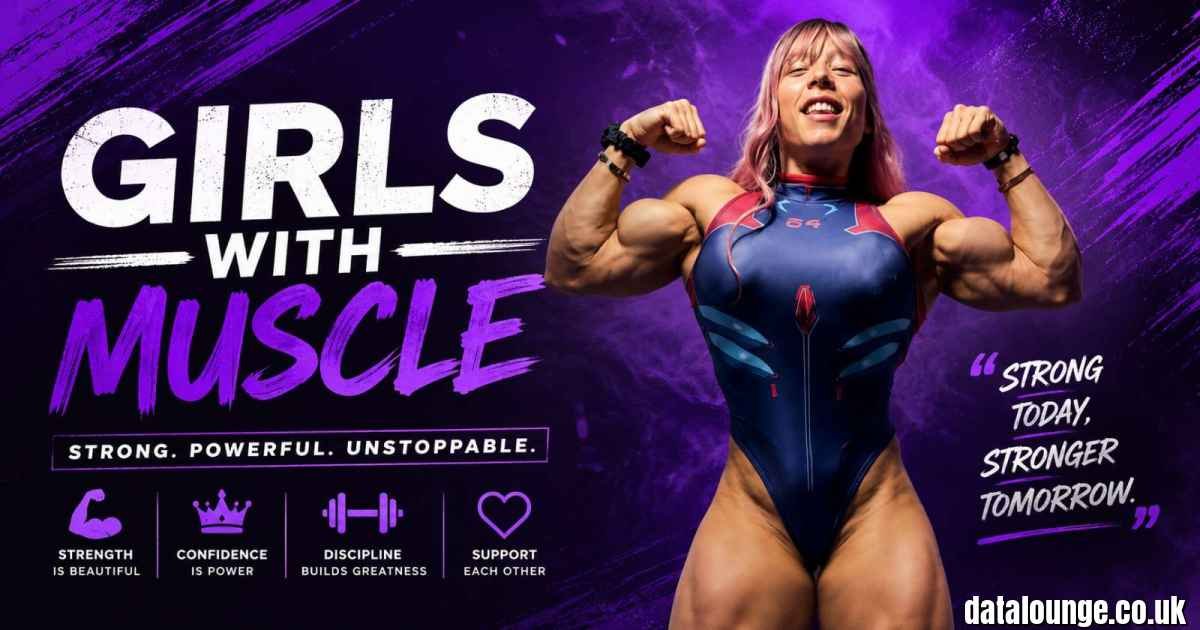
Unlike outdated beauty standards that emphasized only being thin, today’s movement celebrates strength, muscle definition, athletic performance, and self-confidence. The community includes female bodybuilders, bikini competitors, figure athletes, physique competitors, powerlifters, CrossFit athletes, calisthenics enthusiasts, fitness models, and everyday women who enjoy lifting weights. Despite their different goals, they all embrace one simple philosophy: Strong is Beautiful.
Search interest in keywords such as girlswithmuscle, muscular women, women who lift, and fit girls with muscle has surged dramatically in recent years. Fitness hashtags including #GirlsWithMuscle, #WomenWhoLift, #MuscleWomen, and #StrongWomen have collectively generated billions of views across major social platforms, making this one of the fastest-growing fitness communities worldwide.
Why GirlsWithMuscle Is Exploding in Popularity in 2026
Several powerful trends have fueled the rapid growth of the GirlsWithMuscle movement.
The first is the shift in beauty standards. Modern fitness culture increasingly values athleticism over extreme thinness. Women now pursue toned shoulders, defined abs, stronger glutes, and functional strength rather than simply chasing lower numbers on the scale. The message has changed from “skinny is beautiful” to “strong is beautiful.”
The second factor is social media influence. Platforms such as Instagram, TikTok, YouTube, and Threads allow female athletes and fitness coaches to document their progress, share educational content, and motivate millions of followers. Daily workout videos, transformation reels, competition preparation, and nutrition advice have made strength training more approachable than ever before.
Health awareness has also played a major role. Scientific research consistently shows that resistance training improves metabolism, bone density, insulin sensitivity, cardiovascular health, posture, and overall quality of life. More women now understand that lifting weights does not make them bulky overnight because females naturally produce far less testosterone than males. Instead, strength training builds a lean, sculpted, athletic physique over time.
Perhaps the biggest reason is empowerment. Countless women report that lifting weights has improved not only their physical appearance but also their confidence, discipline, resilience, and mental health. Achieving a new personal record in the squat or deadlift often becomes a symbol of personal growth that extends far beyond the gym.
Different Types of GirlsWithMuscle Physiques
One of the biggest misconceptions is that every muscular woman looks the same. In reality, the GirlsWithMuscle community includes a wide variety of physique goals.
Fitness Models typically maintain lean muscle with moderate definition, focusing on symmetry, aesthetics, and overall athletic appearance.
Bikini and Figure Competitors build more muscle while maintaining balanced proportions, rounded shoulders, defined glutes, and a classic hourglass shape suitable for physique competitions.
Women’s Physique Athletes carry significantly more muscle mass while emphasizing conditioning, proportion, and muscular definition developed through years of dedicated training.
Female Bodybuilders (FBB) pursue maximum muscle development, size, and conditioning through advanced strength programs and long-term dedication.
Powerlifters and CrossFit Athletes prioritize performance over appearance. Their training centers around heavy compound lifts, endurance, and functional strength, producing dense, athletic physiques.
Whether someone wants a toned athletic appearance or dreams of stepping onto a bodybuilding stage, there is no single “correct” GirlsWithMuscle physique. Every woman’s goals, genetics, and training style are unique.
How GirlsWithMuscle Build Muscle: Training Principles
Muscle growth follows the same biological principles for everyone, although women often benefit from training approaches tailored to female physiology.
The foundation of every successful program is progressive overload. Muscles only grow when they are consistently challenged by gradually increasing resistance, repetitions, or training volume.
Most experienced women focus heavily on compound exercises because they recruit multiple muscle groups simultaneously. Key movements include barbell squats, deadlifts, Romanian deadlifts, hip thrusts, bench press, overhead press, pull-ups, lat pulldowns, barbell rows, lunges, Bulgarian split squats, and leg press.
A highly effective weekly workout split may look like this:
- Day 1: Glutes and Hamstrings
- Day 2: Back and Biceps
- Day 3: Quads and Calves
- Day 4: Shoulders, Chest, and Triceps
- Day 5: Full Body Strength and Core
Most experts recommend training each muscle group twice per week, using 8-15 repetitions for hypertrophy while prioritizing proper technique and recovery.
Lower-body development remains especially popular within the GirlsWithMuscle community. Exercises such as hip thrusts, Romanian deadlifts, cable kickbacks, Bulgarian split squats, and walking lunges are commonly used to develop stronger glutes and legs.
The most important secret, however, is consistency. Long-term results come from months and years of disciplined training—not from quick fixes or extreme workout challenges.
Nutrition and Diet Plan for Building Female Muscle
Training stimulates muscle growth, but nutrition provides the raw materials necessary for recovery and development.
Protein remains the highest priority. Most sports nutrition experts recommend consuming approximately 1.6-2.2 grams of protein per kilogram of body weight, or roughly 0.8-1 gram per pound for many active individuals. Excellent protein sources include chicken breast, eggs, fish, lean beef, Greek yogurt, cottage cheese, tofu, lentils, and whey protein.
Muscle growth also requires sufficient calories. Women aiming to gain muscle generally benefit from a small calorie surplus of around 200-300 calories per day, while those pursuing body recomposition may alternate between lean bulking and fat-loss phases.
Complex carbohydrates such as oats, brown rice, quinoa, sweet potatoes, whole grains, fruits, and vegetables fuel demanding workouts and improve recovery. Healthy fats from avocados, olive oil, nuts, seeds, and fatty fish support hormone production, which plays a critical role in overall health and muscle development.
Hydration should never be overlooked. Drinking 3-4 liters of water daily supports performance and recovery. Popular evidence-based supplements include creatine monohydrate, whey protein, omega-3 fatty acids, and vitamin D, all of which may help support training goals when appropriate.
Benefits of Being a Girl With Muscle
Building muscle offers benefits that extend well beyond appearance.
Physically, increased lean muscle contributes to a higher resting metabolic rate, making long-term fat management easier. Strength training also improves bone density, reducing osteoporosis risk while strengthening joints, tendons, and ligaments.
Mentally, many women experience improved confidence, reduced stress, greater emotional resilience, and enhanced body image. Reaching new strength milestones often reinforces self-belief in many other areas of life.
Daily life becomes easier as well. Carrying groceries, climbing stairs, playing sports, lifting children, or performing physically demanding work all become more manageable with greater strength and endurance.
Medical professionals increasingly recognize resistance training as one of the most valuable forms of exercise for women throughout every stage of adulthood, supporting long-term mobility, healthy aging, and overall wellness.
Common Myths About GirlsWithMuscle
Several misconceptions continue to discourage women from strength training despite overwhelming scientific evidence.
One common myth is that lifting weights makes women bulky. In reality, women naturally produce much lower testosterone levels than men, making dramatic muscle gain a slow process requiring years of dedicated effort.
Another myth claims that endless cardio is the best path to fat loss. While cardiovascular exercise supports heart health, strength training builds metabolically active muscle, making it highly effective for long-term body composition improvements.
Some believe muscular women lose their femininity. Modern fitness culture strongly challenges this outdated stereotype. Femininity is not determined by muscle size but by confidence, individuality, and self-expression. Strong women continue to demonstrate that athletic physiques and femininity coexist naturally.
There is also confusion regarding supplements. Well-researched products like creatine monohydrate and protein powder are among the safest and most extensively studied sports nutrition supplements when used appropriately.
How to Start Your GirlsWithMuscle Journey in 2026
Beginning your own transformation does not require perfection—it requires consistency.
Start by defining a realistic goal, whether it is improving strength, increasing muscle definition, reducing body fat, or preparing for competition. Join a gym or work with a qualified coach to learn proper lifting technique and establish a structured training program.
Aim for three to five strength-training sessions each week, prioritize progressive overload, consume enough protein, and track your progress through photos, measurements, and workout logs instead of relying solely on the scale.
Following experienced female coaches, athletes, and evidence-based fitness educators can provide both motivation and reliable information. Communities on social media and fitness forums also offer encouragement, training advice, and accountability.
Most importantly, be patient. Visible changes often begin within 8-12 weeks, while major body transformations usually require six to twelve months of consistent effort. Every accomplished female athlete once started with an empty barbell and a first workout.
Final Thoughts
GirlsWithMuscle has evolved into far more than a fitness trend. In 2026, it represents a worldwide movement built on strength, health, discipline, body confidence, and empowerment. Women across every age group and athletic level are proving that muscle is not something to fear—it is something to celebrate.
Whether your goal is developing toned arms, stronger glutes, improved athletic performance, or competing in bodybuilding or powerlifting, strength training offers lasting physical and mental rewards. The future of fitness continues to embrace capable, confident women who prioritize health and performance alongside aesthetics.
Frequently Asked Questions (FAQs)
1. What does GirlsWithMuscle mean?
It refers to women who build lean muscle through strength training and also describes the global online community celebrating muscular female physiques.
2. Does lifting weights make women bulky?
No. Most women develop a lean, athletic physique because natural testosterone levels are much lower than men’s.
3. How much protein should women eat to build muscle?
Most active women benefit from approximately 1.6-2.2 grams of protein per kilogram of body weight, depending on their training goals.
4. How many days per week should beginners lift weights?
A structured program of 3-4 strength workouts per week is an excellent starting point for building muscle and improving fitness.
5. Is GirlsWithMuscle only for competitive bodybuilders?
No. The movement includes everyone from beginners and recreational gym-goers to fitness models, CrossFit athletes, powerlifters, and professional female bodybuilders who value strength, health, and confidence.